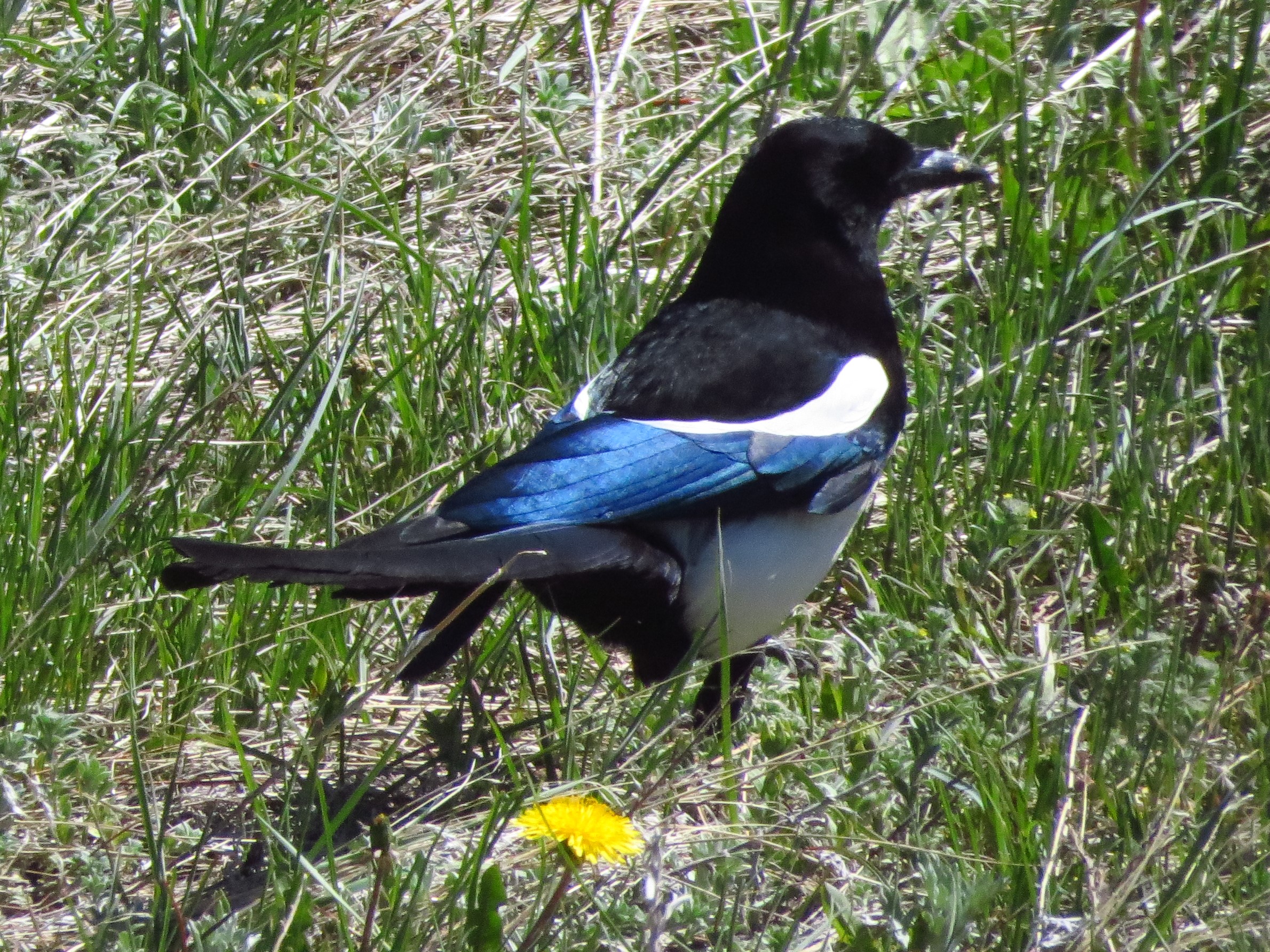

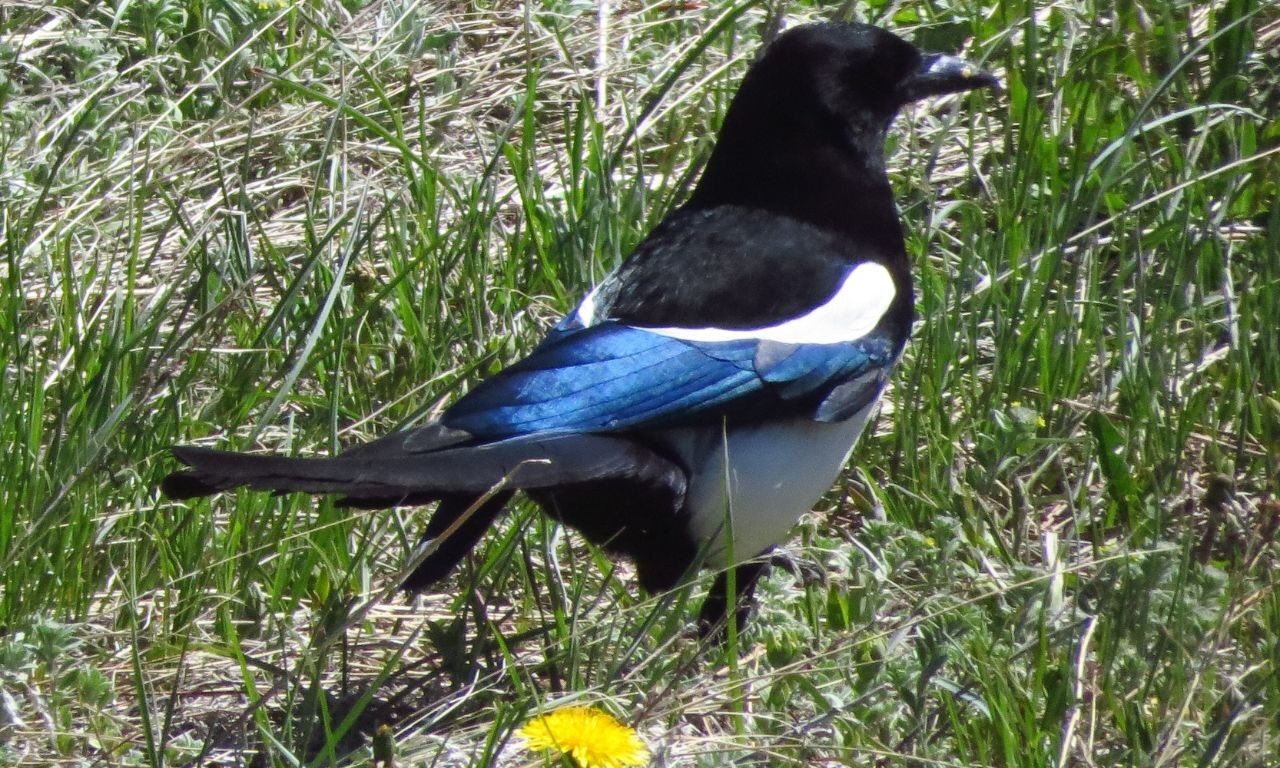
In the fall, many feathered migrants have headed south to the bugs and blossoms zone. Left behind are winter and year-round birds, including magpies. Some birders take them for granted, but “just magpies” is a dismissive label for these smart, glorious birds. Trek to the tropics, and a bird as vivid and arresting as a black-billed magpie would earn top billing on your seen list!
The nonprofit Colorado Field Ornithologists (CFO) documents 420 bird species in Boulder County, including rarities. My old, battered “Audubon Check List” contains eight “jays, crows, and relatives” (corvids), noting black-billed magpies as “very common at all times of the year.”
Magpies show up in all Christmas bird counts and, on most hikes and outings (provided you pay attention), and regularly visit urban or suburban parks, gardens, roadsides, and parking lots. Their glossy, iridescent, black and white feathering is elegant; their swooping, tail-trailing flight breathtaking; their raucous and insistent voices compelling; and their survival skills impressive. Forget the term “birdbrain,” and celebrate them.
Magpies are corvids, known for their smarts. Intelligent and self-aware (they recognize themselves in mirrors), they are problem-solvers when seeking food, whether in natural or human-contrived research settings. They once followed Native American bison hunts, feasting on leftovers from kills. Although bison are rare these days, magpies still follow other wild hunts, keeping beady eyes open to steal prey from foxes, coyotes, badgers, and other predators. They glean ticks from the fur of pest-ridden deer, elk, and moose. They’re supreme opportunists.
Yes, magpies steal eggs and nestlings of other birds, but milder, mainstay foods include insects, seeds, fruit, and carrion. They cache food if there’s plenty, returning later to reclaim it. This is a feat of memory; and sneakiness; to retrieve a stash furtively.
Do you relish quirky facts? Note: Magpies sometimes stash dog poop, but please don’t rely on them to clean up after your pooch!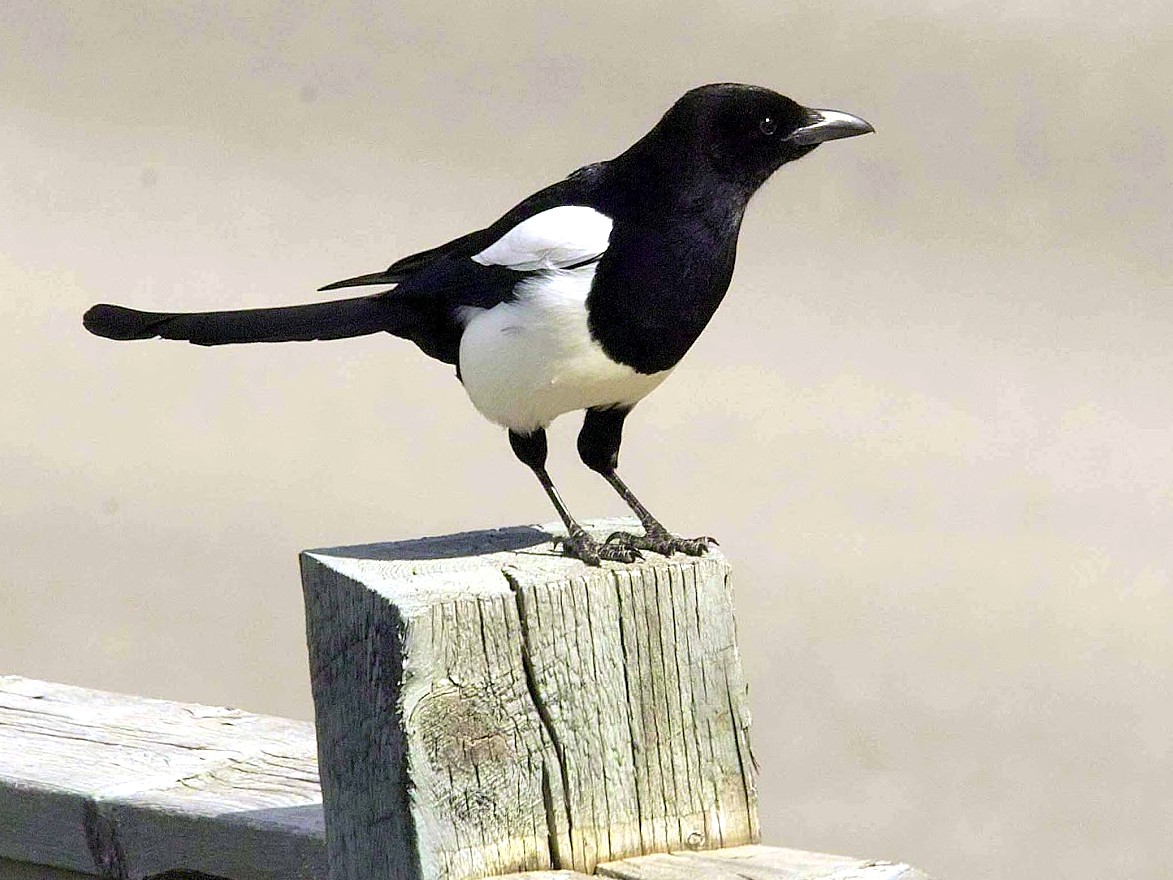
Besides remembering where they hid food, magpies also recognize and remember individual human faces, even bearing grudges against people who have caused them harm.
Writing about magpies without slipping into anthropomorphism (describing them in human terms) is tricky. They walk with an apparent “swagger”, their long tails flicking “arrogantly” from side to side. Their calls sound “bossy” and “imperious.” They seem “opinionated,” especially when they gather in large groups, chattering.
Why do they assemble? A nursery rhyme, a relic of ancient ornithomancy (predicting the future through bird behavior), talks of magpie gatherings:
One for sorrow,
Two for joy,
Three for a girl,
Four for a boy,
Five for silver,
Six for gold,
Seven for a secret,
Never to be told.
What’s the true reason for assemblies? Sometimes, and it’s no secret, a group gathers to warn off a roosting owl, hawk, or climbing cat, mobbing the menace until it moves on. If you hear concentrated squawking and see a fussing, fidgety bunch of magpies, stop to figure out the cause. Magpies mob ground-based hunters, foxes, and coyotes, creating a hubbub so the hunter will move on.
When a magpie dies, other magpies may gather around the corpse. These groups, or “funerals,” suggest possible grief and emotional intelligence, attributes we cannot evaluate. Maybe the birds gather to assess whether the dead bird is known to them or linked to possible risks and hazards to them. It’s an open question.
Talking details: Male and female magpies look alike, but males are larger. They pair for life and jointly building huge stick nests, although she does more of the interior work, the cupped platform on which she lays one to nine brownish eggs. Watch the nest entrance, a round hole at the side of the untidy nest.
Females alone incubate eggs for 18 days. Their mates bring food for them and the nestlings as they hatch, pink, naked, and ravenous. Once chicks fledge, they leave the nest but stay with the family and differ from adults in their shorter tails and scruffier looks. They beg for food and learn about life’s dangers from vigilant (and loud) parents. Dangers abound, from feral cats to owls, squirrels, weasels, mink, and crows.
Whether you see two magpies and take joy in their behavior or see a host of them (a parliament, chatter, conventicle, gulp, mischief, or tittering, there’s no one accepted collective noun), please treat them as more than “just magpies.”