

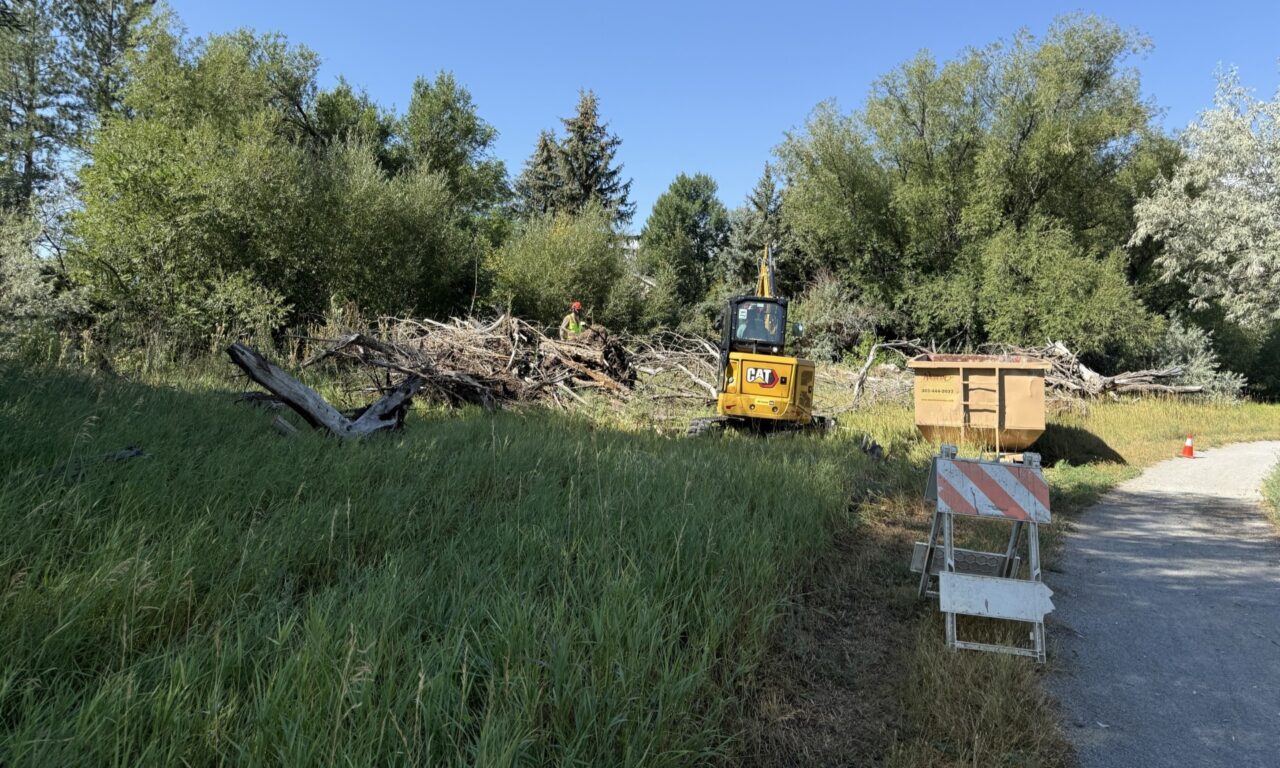
In recognition of the growing wildfire risk in the region, Boulder County has established the Ditch Wildfire Mitigation Program to address hazardous fuels along ditch corridors and waterways. These corridors, while critical for irrigation, agriculture, municipal water delivery, and ecological function, can also serve as vectors for wildfire spread because of continuous fuel loads and accumulated biomass.
The program is administered by Boulder County Parks & Open Space, via the Water Resources Group within the Agricultural Resources Division and is supported through perpetual funding from the 2022 ballot measure 1A Wildfire Mitigation Sales Tax Initiative. Its purpose is to reduce wildfire hazards along ditch systems while ensuring compatibility with water resource management, agricultural operations, and habitat conservation.
The program has four main objectives. First, we aim to reduce risk to the community through identification and mitigation of hazardous fuel concentrations, particularly in areas adjacent to residential development, municipalities, and critical infrastructure. Second, our hope is to collaborate with all of our stakeholders. The goal is to establish and maintain cooperative working relationships with ditch companies, homeowners associations, municipalities, federal and state resource agencies, and other land management partners. Third, we need to find the best ecological balance that maintains or enhances wildlife habitat and ecosystem function while prioritizing public safety. Our last objective is to create sustainable operations that prevent the reaccumulation of hazardous fuels in ditch corridors.
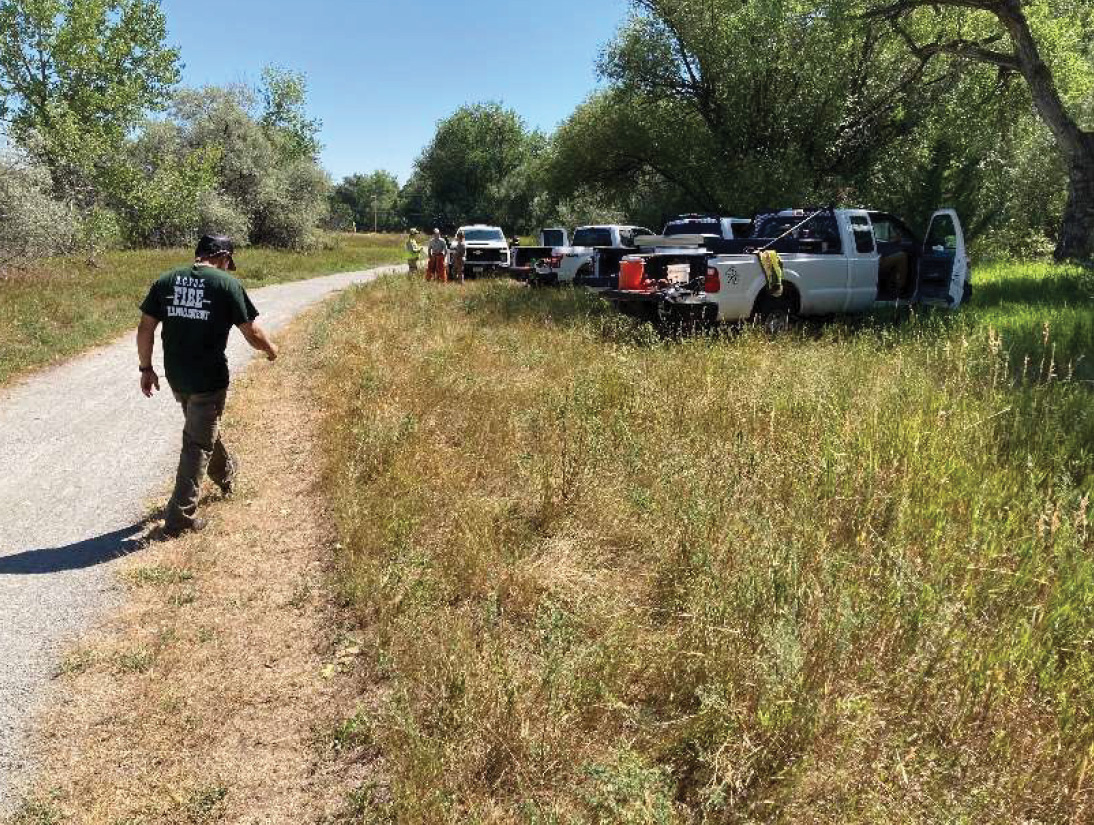
Because this program is still in its infancy, we are considering a number of strategies to implement our mitigation plans. Thus far we have found the simplest tool to be removal and transportation of all dead, woody biomass to offsite facilities for mulching so it can return the nutrients back to the land. In the long run, however, this may not be the most cost-effective strategy. We have also done some onsite chipping and redistribution of woody material. However, this may be perceived as rearranging of fuels unless we can incorporate the use of mycelium to accelerate decomposition.
We have also incorporated some targeted grazing (e.g., goats) to manage fine fuels and regrowth, but again, these contracts might not be financially feasible for long-term planning. Despite being potentially hot topics, we are also exploring the use of environmentally friendly herbicides to manage woody growth along ditch banks and the use of prescribed fire where feasible, recognizing the limited operational window and environmental considerations. Lastly, as the summer growing season winds down, we are focusing our efforts on elective thinning and clearing of legacy slash piles to reduce continuity of fire-carrying fuels.
During the program’s initial phase, the ditch mitigation staff will prioritize stakeholder engagement and joint planning to ensure coordinated action across jurisdictions and land ownerships. Operational priorities will focus on addressing the most hazardous slash accumulations, especially those near communities or within high-risk corridors. The areas of highest concern are outlined in the county’s recently updated Community Wildfire Protection Plan. This is based on independent fire modeling and historical weather patterns in the area.
Over time, the program hopes to establish ongoing fuel management cycles to maintain reduced risk conditions, prevent fuel buildup, and enhance wildfire resilience across the county’s ditch network. Adaptive management practices will be employed to incorporate stakeholder input, evolving science, and monitoring results into long-term strategies. This program will only succeed if we can maintain close coordination with our land management partners, local municipalities, ditch companies, and conservation organizations. The Boulder County Parks & Open Space Agricultural Resources Division is committed to balancing wildfire risk reduction with the protection of ecological values and the operational needs of water delivery systems.